
The U.S. just had its hottest month on record
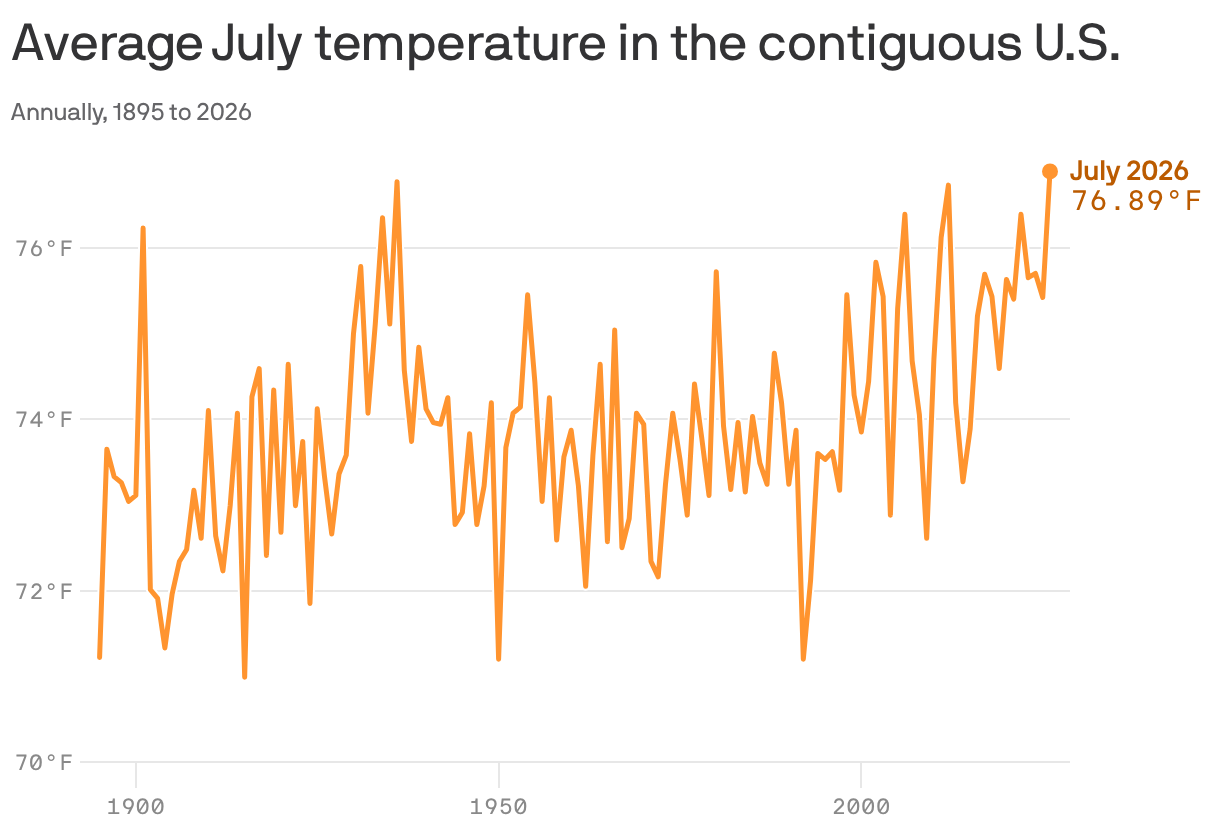
Reproduced from NOAA; Chart: Axios VisualsJuly was the hottest month on record for the contiguous U.S., per new federal data dating back to 1895.By the numbers: Last month's average temperature was 76.89°F, topping the 76.77°F mark set in July 1936.That's 3.3°F warmer than the 1901-2000 average.What they're saying: "Above-average temperatures covered the entire [continental U.S.], with all states ranking in the warmest third of their July temperature records and none ranking near or below average," NOAA's National Centers for Environmental Information said in its monthly report.The big picture: July featured a series of "heat domes" across the country that trapped warm air beneath them, fueling several extreme heat events.Researchers have found that climate change is making extreme heat events more common and more intense — but they're also linked to phenomena and patterns like El Niño.What we're watching: NOAA's Climate Prediction Center is calling for an elevated chance of above-average temperatures for most of the continental U.S. through August.It's also possible that 2026 will set a new record for the hottest year globally.
Reported by 1 outlet — Axios. See all sources ↓
Read the full report at Axios ↗
Why it matters
A world story we're tracking; its significance and source trust firm up as more outlets confirm it.
- What's the story?
- Reproduced from NOAA; Chart: Axios VisualsJuly was the hottest month on record for the contiguous U.S., per new federal data dating back to 1895.By the numbers: Last month's average temperature was 76.89°F, topping the 76.77°F mark set in July 1936.That's 3.3°F warmer than the 1901-2000 average.What they're saying: "Above-average temperatures covered the entire [continental U.S.], with all states ranking in the warmest third of their July temperature records and none ranking near or below average," NOAA's National Centers for Environmental Information said in its monthly report.The big picture: July featured a series of "heat domes" across the country that trapped warm air beneath them, fueling several extreme heat events.Researchers have found that climate change is making extreme heat events more common and more intense — but they're also linked to phenomena and patterns like El Niño.What we're watching: NOAA's Climate Prediction Center is calling for an elevated chance of above-average temperatures for most of the continental U.S. through August.It's also possible that 2026 will set a new record for the hottest year globally.
- How widely is it covered?
- 1 outlet, average source rating 7.0/10.
- When was it last updated?
- 1m ago.
How outlets are framing the same story
Here's how each outlet is covering the story — compare their headlines and timing at a glance.
- Coverage card1 outlet1CoverageScouting report
The U.S. just had its hottest month on record
Sources1TypeCoverageAxios