
Trump's golden age reality check
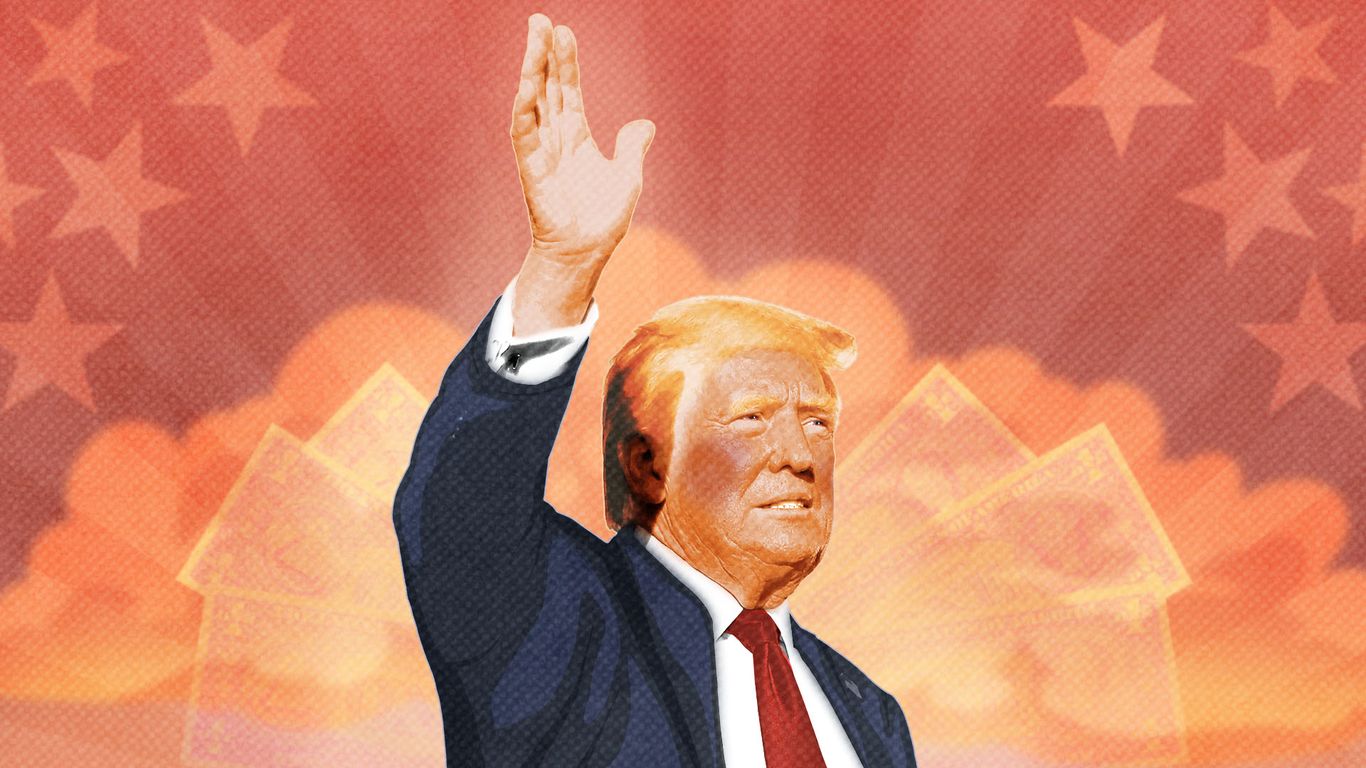
The Trump administration's rosy promises of a new "golden age" with 6% economic growth have fizzled on the realities of slower-than-anticipated growth and souring consumer sentiment.Why it matters: President Trump's roller coaster economy has risen with consumer spending and AI investment but also tumbled on tariff uncertainty, stubborn inflation and his Iran war, muddling the economic picture.Trump preaches a golden future, but many voters aren't buying it.That's a warning sign for the midterms: Reuters-Ipsos polling out this week found that Americans favored Democrats over Republicans on economic policy for the first time in nearly a decade.The big picture: Roughly 18 months into Trump's second term, the economy has proved more resilient than many expected, buoyed in large part by an AI infrastructure buildout that transcends Washington politics.But the dramatic acceleration the administration promised has yet to materialize. Many economists believe the administration's most ambitious growth targets would require a productivity boom well beyond anything currently visible in the data.Reality check: The economy grew at a 1.5% annualized rate in the second quarter, slowing from the 2.1% pace in the first quarter.
Reported by 1 outlet — Axios. See all sources ↓
The Trump administration's rosy promises of a new "golden age" with 6% economic growth have fizzled on the realities of slower-than-anticipated growth and souring consumer sentiment.Why it matters: President Trump's roller coaster economy has risen with consumer spending and AI investment but also tumbled on tariff uncertainty, stubborn inflation and his Iran war, muddling the economic picture.Trump preaches a golden future, but many voters aren't buying it.That's a warning sign for the midterms: Reuters-Ipsos polling out this week found that Americans favored Democrats over Republicans on economic policy for the first time in nearly a decade.The big picture: Roughly 18 months into Trump's second term, the economy has proved more resilient than many expected, buoyed in large part by an AI infrastructure buildout that transcends Washington politics.But the dramatic acceleration the administration promised has yet to materialize. Many economists believe the administration's most ambitious growth targets would require a productivity boom well beyond anything currently visible in the data.Reality check: The economy grew at a 1.5% annualized rate in the second quarter, slowing from the 2.1% pace in the first quarter. The economy has grown at roughly a 2% annualized pace since the start of 2025.That's a solid pace, but it's little different from the economy's long-run trend and well short of the growth rates some of Trump's top economic officials have hyped in recent months.Flashback: If you asked Commerce Secretary Howard Lutnick in January, growth could have hit 5% in the first quarter — even 6%, if the Fed cut interest rates, he said — which didn't happen.Top White House economist Kevin Hassett pitched up to 6% growth back in the spring, attributing the boost to a future factory boom.After back-to-back quarters of roughly 4% growth in the middle of 2025 — boosted in part by swings in trade tied to tariffs — Treasury Secretary Scott Bessent called the performance a "harbinger of what's to come."Bessent's "3-3-3" economic blueprint targets sustained 3% annual growth.Yes, but: The Congressional Budget Office estimates potential GDP growth will average about 2% over the next decade. The last time the economy expanded at rates consistent with Trump officials' high-end predictions was during the one-off reopening from the pandemic."That's just unrealistic," says Michael Klein, an economics professor at Tuft University's Fletcher School and executive editor of EconoFact.
Read the full report at Axios ↗
Why it matters
A world story we're tracking; its significance and source trust firm up as more outlets confirm it.
- What's the story?
- The Trump administration's rosy promises of a new "golden age" with 6% economic growth have fizzled on the realities of slower-than-anticipated growth and souring consumer sentiment.Why it matters: President Trump's roller coaster economy has risen with consumer spending and AI investment but also tumbled on tariff uncertainty, stubborn inflation and his Iran war, muddling the economic picture.Trump preaches a golden future, but many voters aren't buying it.That's a warning sign for the midterms: Reuters-Ipsos polling out this week found that Americans favored Democrats over Republicans on economic policy for the first time in nearly a decade.The big picture: Roughly 18 months into Trump's second term, the economy has proved more resilient than many expected, buoyed in large part by an AI infrastructure buildout that transcends Washington politics.But the dramatic acceleration the administration promised has yet to materialize. Many economists believe the administration's most ambitious growth targets would require a productivity boom well beyond anything currently visible in the data.Reality check: The economy grew at a 1.5% annualized rate in the second quarter, slowing from the 2.1% pace in the first quarter.
- How widely is it covered?
- 1 outlet, average source rating 7.0/10.
- When was it last updated?
- just now ago.
How outlets are framing the same story
Here's how each outlet is covering the story — compare their headlines and timing at a glance.
- Coverage card1 outlet1CoverageScouting report
Trump's golden age reality check
Sources1TypeCoverageAxios