
NASA’s Curiosity Mars Rover Discovers Field of Honeycomb Textures


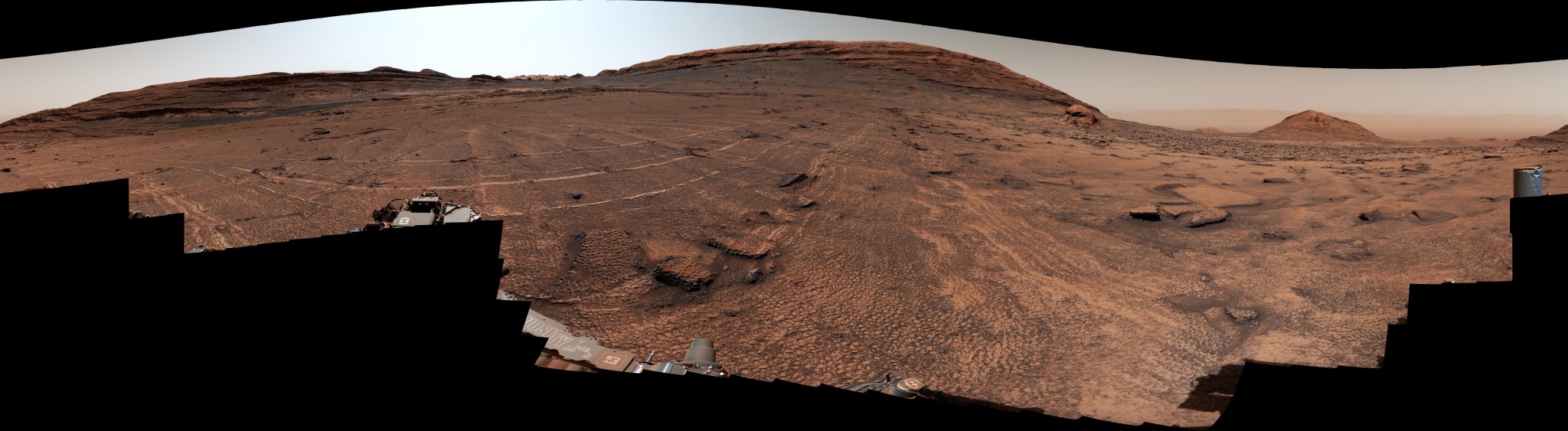
2 Min Read NASA’s Curiosity Discovers a Field of Martian Polygons PIA26729 Credits: NASA/JPL-Caltech/MSSS Photojournal Navigation Science Photojournal NASA’s Curiosity Discovers a… Photojournal Home Photojournal Search Latest Content Galleries Feedback RSS About Downloads NASA’s Curiosity Discovers a Field of Martian Polygons PNG (305.97 MB) PIA26729 Figure A PNG (3.37 MB) Description NASA’s Curiosity Mars rover captured this 360-degree view of an expanse of terrain covered in surface features called polygons on June 19 and 20, 2026, the 4,930th and 4,931st Martian days, or sols, of the mission. The rover has found polygons several times in the past, but never so many in one place.
Reported by 3 outlets — NASA, The Verge. See all sources ↓
NASA's Curiosity rover took pictures of a large area on Mars covered in honeycomb-shaped cracks. The cracks, called polygonal fractures, are each about 1.5 to 3 inches (4 to 8 cm) across. They were seen in a valley named Valle Grande, which is bigger than any patch found before. The images were made on June 19 and 20, 2026 (Martian days 4930 and 4931).
Why it matters
These patterns tell scientists that Mars once had wet and dry cycles, which helps us understand if the planet could have supported life. Knowing the surface texture also aids planning for future human missions.
- What are the honeycomb-shaped features called?
- They are called polygonal fractures.
- How big is each fracture?
- Each one is about 1.5 to 3 inches (4 to 8 centimeters) across.
- Where did Curiosity find them?
- In a Martian valley nicknamed Valle Grande.
How outlets are framing the same story
These are the main editorial angles found across reporting. Use them to quickly compare what different outlets emphasize, omit, or question.
NASA outlets give a straightforward scientific description of the discovery, while The Verge uses a vivid metaphor and references earlier coverage to highlight the scale.
- Coverage cardFraming signal1AngleScouting report
Use of vivid metaphor 'sea of polygons' to emphasize scale.
Sources1TypeAngleThe VergeCalls the field a 'sea of polygons' to show vastness.
- Coverage cardFraming signal2AngleScouting report
Includes note about preparations for future Moonwalk simulations.
Sources1TypeAngleNASAMentions upcoming Moonwalk simulation preparations.
- Coverage cardFraming signal3AngleScouting report
Highlights that earlier findings were only small patches.
Sources1TypeAngle