
Starburst Galaxy Centaurus A
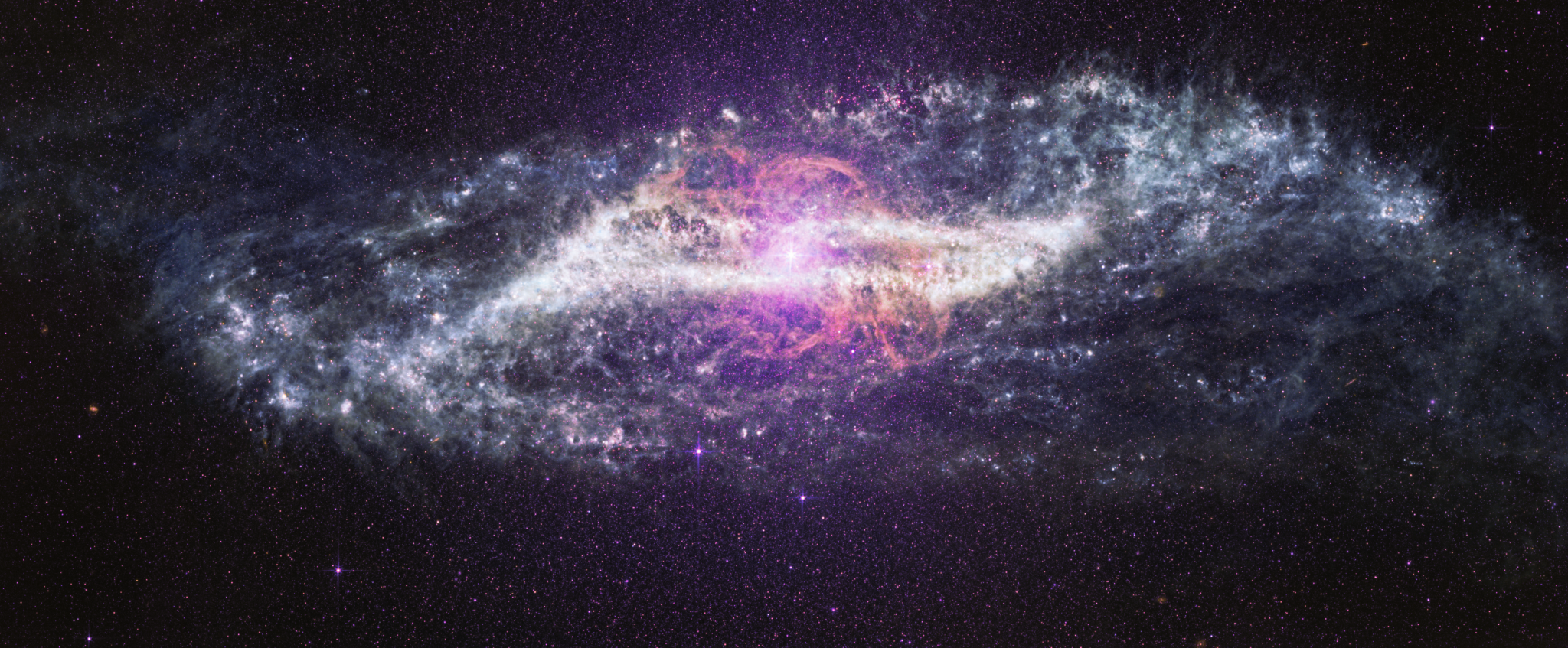
Image: NASA, ESA, CSA, STScI; Image Processing: Alyssa Pagan (STScI), Joseph DePasquale (STScI), Macarena Garcia Marin (ESA Office at STScI) In this July 6, 2026, image, NASA’s James Webb Space Telescope’s Mid-Infrared Instrument (MIRI) reveals the nearby galaxy Centaurus A, exposing the dusty structures and hidden activity that shape this unusual system. Centaurus A is 11 million light-years away from Earth, relatively close in cosmic terms.
Reported by 1 outlet — NASA. See all sources ↓
NASA's James Webb Space Telescope used its MIRI instrument to take a new picture of the galaxy Centaurus A. The image shows dusty lanes and hidden activity inside the galaxy. Centaurus A is about 11 million light‑years from Earth. Scientists study it to learn how galaxies and their black holes grow together.
Why it matters
Understanding Centaurus A helps us see how starbursts and black holes affect galaxy evolution. This knowledge can improve models of how our own Milky Way may change over time.
- What instrument took the image?
- The Mid‑Infrared Instrument (MIRI) on the James Webb Space Telescope took the image.
- How far is Centaurus A from Earth?
- It is about 11 million light‑years away.
- Why is Centaurus A useful for scientists?
- Its active starburst and black hole let researchers study galaxy growth.
How outlets are framing the same story
Here's how each outlet is covering the story — compare their headlines and timing at a glance.
Only one outlet reported the story, so all outlets frame it the same way.
- Coverage card1 outlet1CoverageScouting report
Starburst Galaxy Centaurus A
Sources1TypeCoverageNASA